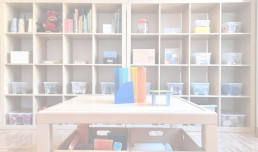
An educational communication journey that intertwined pedagogy, parenting support, and culture, transforming an international vision into an experience deeply rooted in the Italian context.
Giving an Italian identity to an international vision
There are projects that can cross borders simply by adapting a catalog, updating a visual identity, or translating some content. Education belongs to a different category. Every educational reality is born from the encounter between universal values and deeply local sensitivities: the relationship with families, the idea of growth, the role of educators, the meaning of childhood, and the very way a community interprets accompanying children in their first years of life. For this reason, managing the development of a major international project in our country meant working on educational communication as a space for the relationship between pedagogy, culture, and the local area.
In recent years, we have had the opportunity to contribute to the Italian journey of Busy Bees, one of the world’s leading organizations dedicated to early childhood education and care. More than a professional assignment, it was an experience that allowed us to observe firsthand how a global vision can transform into an authentically Italian project without losing coherence, recognizability, and depth.
The challenge, however, did not consist only in telling the story of an international brand with our country’s cultural sensitivity. The Italian project developed a distinctive educational and pedagogical identity, capable of differentiating itself from other international organizations present in the area.
Bilingualism, music education, outdoor education, focus on nutrition, parenting support, continuous staff training, and the centrality of the educational relationship were not merely complementary activities, but structural elements of the daily experience lived by children and their families.
Telling the Busy Bees story meant translating a precise educational philosophy into words, images, and experiences: the way the day is organized in the centers, the role attributed to educators, the relationship with parents, the opportunities offered to children, and the building of a community capable of accompanying growth far beyond the time spent within the educational spaces.
Over the course of two years, we helped shape this identity in all its dimensions, working on the 360-degree brand experience: from welcoming families to educational environments, from parenting support content to local initiatives, to the construction of tools and pathways capable of strengthening the sense of belonging to the Busy Bees community.
Operating across more than thirty facilities distributed throughout Italy required much more than communication management. Each location has its own identity, specific professional skills, distinctive activities, and a unique relationship with the local area. Some centers emphasize outdoor education, others develop specialized workshops or innovative pathways, while others build their strength through relationships with companies, neighborhoods, and local communities.
The most interesting challenge lay precisely in this: maintaining a shared international vision while, at the same time, enhancing the uniqueness of the Italian educational experience, which is unrepeatable in each of its communities.

The hardest challenge: speaking to families and organizations without losing authenticity
The world of childhood possesses a particular complexity. Alongside parents, who seek trust, listening, and educational continuity, there are companies, public bodies, universities, and organizations that consider childcare services a strategic component of their corporate welfare, organizational well-being, and work-life balance policies.
During the project, we had the opportunity to engage with very different realities, embedded in institutional, university, healthcare, and entrepreneurial contexts. Each situation required a specific approach, but all shared the same fundamental question: how to build places capable of simultaneously supporting the growth of children, the peace of mind of families, and the well-being of the people who work there.
The communication challenge did not consist in speaking to different audiences through separate languages, but in maintaining a coherent and recognizable vision. On one hand, it was necessary to preserve the emotional closeness that characterizes the relationship with parents; on the other, we had to convey authority, educational method, and organizational capacity to more structured stakeholders, called upon to design services that reflected the values and culture of their own organizations.
We chose to work on a simple principle: not to build two different narratives, but a single educational idea capable of expressing itself in different forms depending on the context. The same attention given to children and families also emerges in the dialogue with companies, universities, and public bodies, transforming the educational service into a tool for shared growth and value for the entire community.
The result was a communication ecosystem in which parenting support, pedagogical quality, and a sense of belonging remained constantly at the center, regardless of the locations, channels, or stakeholders involved.


A website is not a showcase, but the first space for relationship
In the childhood sector, the website is not simply an information site. It is the first environment in which a family comes into contact with an educational community and begins to imagine their children’s growth journey. For this reason, the platform’s revision was not an exclusively technical intervention, but a true cultural project capable of translating Busy Bees’ values and educational identity online.
We worked on information architecture, content readability, and the construction of pathways capable of accompanying the user naturally. The distinction between the needs of families and those of organizations became clearer, without breaking the unity of the overall narrative and maintaining a coherent vision of the educational experience. We dedicated great attention to white space, typographic hierarchy, the balance between text and visual elements, and the presence of multimedia materials to encourage a more serene and conscious experience. The goal was not to increase the quantity of information, but to improve its quality and its ability to stay in people’s memories.
Alongside the website, the blog represented an essential tool for relationship and parenting support. Over the years, we have continuously managed the production and optimization of editorial content, addressing topics related to children’s autonomy, outdoor education, sustainability, psychomotricity, bilingualism, and the daily life of families. We didn’t just publish new articles; we also updated and improved existing content so that it would continue to offer educational value, authority, and visibility over time.
The same philosophy guided the entire digital ecosystem, including the YouTube channel, which we reorganized through playlists, covers, descriptions, and editorial criteria consistent with the rest of the communication. Every touchpoint contributes to building a recognizable experience, where families, educators, and organizations find the same values and the same idea of childhood.
One conviction guided this work and continues to lead us: the educational relationship begins long before entering a school and also passes through the way a project chooses to tell its story, to inform, and to accompany people over time.


Pedagogy told through music, nature, and experience
One of the most stimulating aspects of the journey involved the creation of original content developed together with the professionals who operate daily within the Italian reality. The communication work was not limited to describing services or activities, but translated a complex pedagogical vision—made of concrete experiences, relationships, and educational practices lived every day in the centers—into accessible language.
Music education represented one of the most significant examples of this approach. In collaboration with musicians and industry experts, we presented music not as a simple workshop activity, but as a universal language and a tool for cognitive, emotional, and relational growth. We presented the opportunity to listen, experiment, and share sound experiences from the earliest years of life as an essential component of personal development, capable of fostering creativity, mutual listening, and individual expression.
A similar path was taken for outdoor education, a topic that has taken on an increasingly central role within the international pedagogical debate in recent years. We translated the relationship with nature, movement, exploration, and direct experience into content capable of speaking to Italian families while keeping the theoretical depth of these approaches intact. The natural environment is not a simple backdrop for educational activities, but an integral part of the growth process, the achievement of autonomy, and the construction of the relationship with the outside world.
The theme of nutrition also occupies a central space in the pedagogical narrative. Seasonality, the origin of raw materials, the colors of food, and the value of conviviality were transformed into editorial paths, recipes, nursery rhymes, games, and materials shared with families, so that mealtime would become an experience of discovery and education about nature. The kitchen was not presented as a simple service, but as a laboratory of knowledge capable of developing curiosity, well-being, environmental awareness, and respect for the rhythms of the seasons.

Every school belongs to a context before it belongs to a network
Schools do not exist in a vacuum. They live within neighborhoods, relationships, and daily habits that help define their character and meaning. . For this reason, the communication work was not limited to building a shared national identity, but required constant attention to the specificities of individual local areas and the communities that inhabit them.
We dedicated particular care to the local presence of the facilities, working on the optimization and standardization of over thirty Google Business profiles. The goal was not only to improve digital visibility but to make the different locations easily comparable and understandable for families looking for an educational service in their area. The choice of photographs, the organization of information, the highlighting of distinctive services, and descriptive consistency contributed to building a clear, reliable, and homogeneous consultation experience.
We reserved great attention to the selection of images, so that each center would be portrayed through authentic photographs, consistent with the brand identity and capable of conveying the quality of the spaces, activities, and educational relationships. The uniformity of visual language did not mean a flattening of differences, but rather the enhancement of local peculiarities within a common and recognizable framework.
At the same time, we highlighted the strategic services that characterize each reality: bilingual paths, music workshops, outdoor activities, seasonal camps, projects dedicated to families, and initiatives built in relation to the surrounding social context. This work allowed each center to be placed within its own local ecosystem, also favoring a conscious comparison with other educational offerings in the various geographical areas.
This was not simply a geolocation or digital positioning activity, but an enhancement of local public spaces, proximity relationships, and social networks that accompany children’s growth and support families. Each reality has its own history, specific professional skills, and different ways of experiencing the relationship with the local area.

Monterosa 91: When Renzo Piano’s project meets childhood
Among the experiences that most marked this journey was the opening of a location within Monterosa 91, the urban campus designed by Renzo Piano and the protagonist of a major sustainable regeneration project in the heart of Milan.
Born as the headquarters of Il Sole 24 Ore and subsequently redesigned as a space open to the city, the complex represents a virtuous example of how architecture, environment, and relationships can converge in the construction of new collective places. The Parco della Luce, the green heart of the intervention, promotes biodiversity and rebuilds connections between people, work, and nature, giving back to the city a more permeable, sustainable, and inclusive dimension.
The environments dedicated to childhood also fully participate in this vision. Tactile experiences, water elements, transformable furniture inspired by the Busy Bees educational philosophy, and flexible spaces testify to a precise idea: the environment is not just the place where education happens, but one of its fundamental tools. The quality of space, light, and relationships becomes an integral part of the children’s growth path and the families’ daily lives.


On the occasion of this opening, we proposed and developed a new identity narrative, designed to translate Busy Bees’ founding principles into local language and make them a shared heritage of the communities involved. The work did not consist in the simple definition of a mission or a corporate vision, but in the construction of a value system capable of connecting care, innovation, inclusivity, parenting support, pedagogical research, and international openness.
Our essence, as we chose to tell it, was articulated around six complementary dimensions: care for the individual, support for families, attention to societal changes, the educational challenge as a process of continuous evolution, innovation based on research, and a global vision capable of valuing exchange and inclusivity. Rather than importing an international model, we worked to reinterpret it through Italian sensitivity, building a language close to people and consistent with the cultural context in which the project took shape.
The result was not a simple institutional manifesto, but a narrative and relational tool, capable of being recognized by educators, families, organizations, and local communities. Concepts such as listening, protection, harmony, understanding, and attention to the environment became concrete elements of a new shared educational identity, lived daily in the educational spaces and the relationships that animate them.

Building a visual culture based on responsibility
Working with a network spread across the country meant addressing an essential issue: the way children and educational communities are represented.
We chose not to impose a uniform aesthetic, but to build a shared culture of the image, defining common criteria with the coordinators for managing release forms, selecting photographs, and producing content. The goal was to ensure authenticity, respect for privacy, and visual coherence, allowing each center to express its identity within a recognizable and responsible framework.

Attracting educators means telling the story of a professional community
In the world of childhood, the quality of a project depends first and foremost on the people who make it possible.
For this reason, we supported employer branding and recruiting activities with a narrative capable of highlighting continuous training, collaboration, and international openness. The presence of bilingual paths and professionals from different backgrounds required an inclusive language, based not only on skills but on the sense of belonging to a shared educational community.

A project that left its mark
The journey described in this article belongs to a specific phase in the history of Busy Bees Italy. Subsequently, the Italian network embarked on a new path, continuing its development under a different entrepreneurial entity.
Today, we recognize this project as one of the experiences that helped define our approach to educational communication.
We faced a complex challenge: accompanying a major international project in building an identity capable of engaging with Italian culture, enhancing its educational sensitivity without losing the strength of the original vision.
This experience continues to guide our work. Every organization has a different story, but the challenges are often the same: building trust, creating authentic relationships, and transforming values, culture, and skills into communication capable of lasting over time.
It is with this approach that ARS accompanies organizations, institutions, and businesses in the development of projects where identity, people, and the local area grow together.
Do you want to build communication capable of truly telling the story of your organization’s values?
At ARS, we transform identity, culture, and skills into authentic communication strategies, capable of creating trust, strengthening relationships, and enhancing your project over time!